
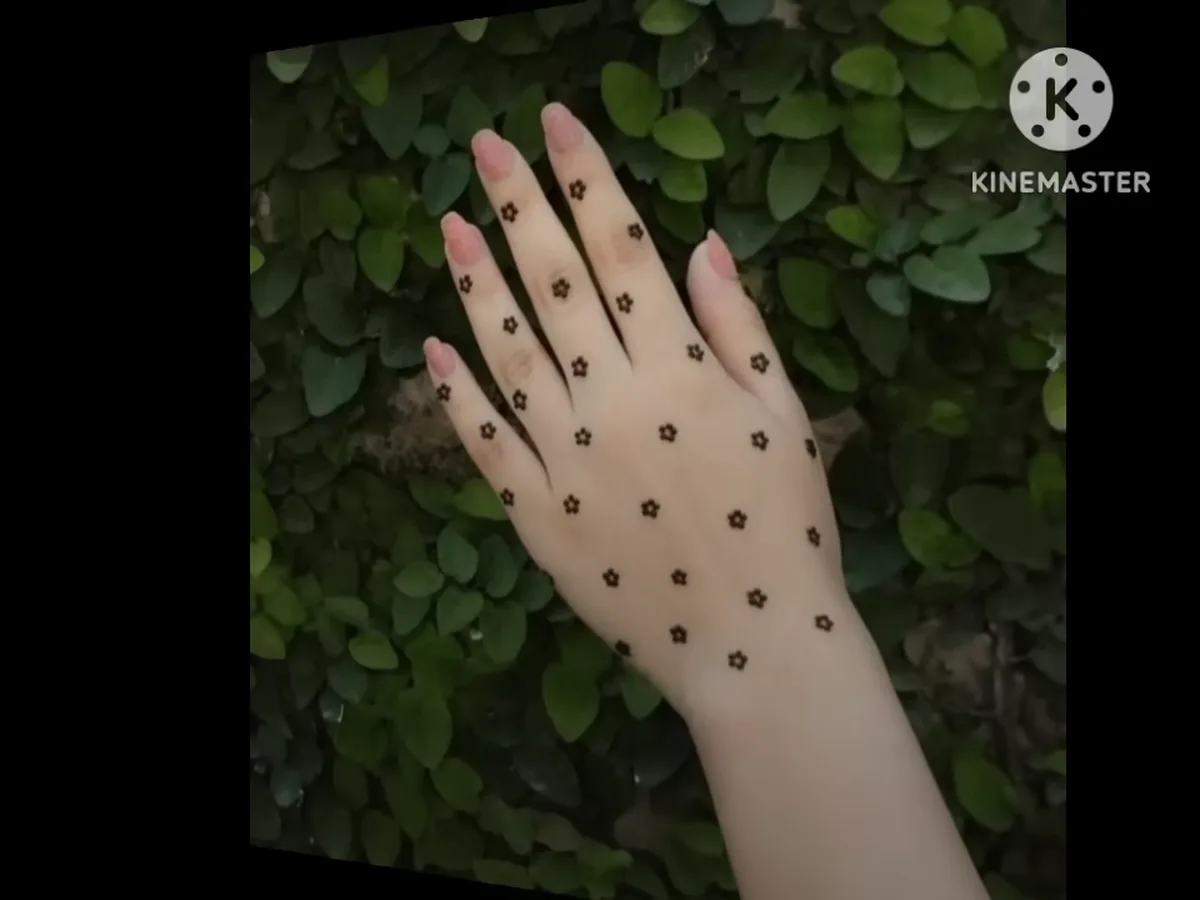
Aesthetic Mehndi Design: Small, Minimal & Elegant Ideas for Front Hand, Back Hand and Fingers (India & Pakistan)
An aesthetic mehndi design feels intentional because the motif, spacing and placement work together. For a minimal look, choose one small flower, vine, bow or geometric accent, then leave enough open skin for the shape to stand out. A design does not need to cover the full hand to feel complete.
Whether you are planning an Eid look, a wedding guest outfit or a small design for another celebration, start with what you enjoy wearing. A saved photograph is a reference, not a rule about how your hands should look.

Choose an aesthetic by the shapes you like
- Soft floral: open petals, small buds and curved leaf stems.
- Clean geometric: narrow bands, arcs and repeated small triangles.
- Jewellery inspired: a bracelet, one pendant and a few dotted connections.
- Playful: a small bow, heart or star, used as a deliberate accent.
- Traditional minimal: a compact mandala, lotus or paisley with restrained filling.
Pick one family of shapes. Combining all five usually makes a small design busier rather than more personal.
Twelve aesthetic mehndi design ideas
1 Tiny lotus on the back hand
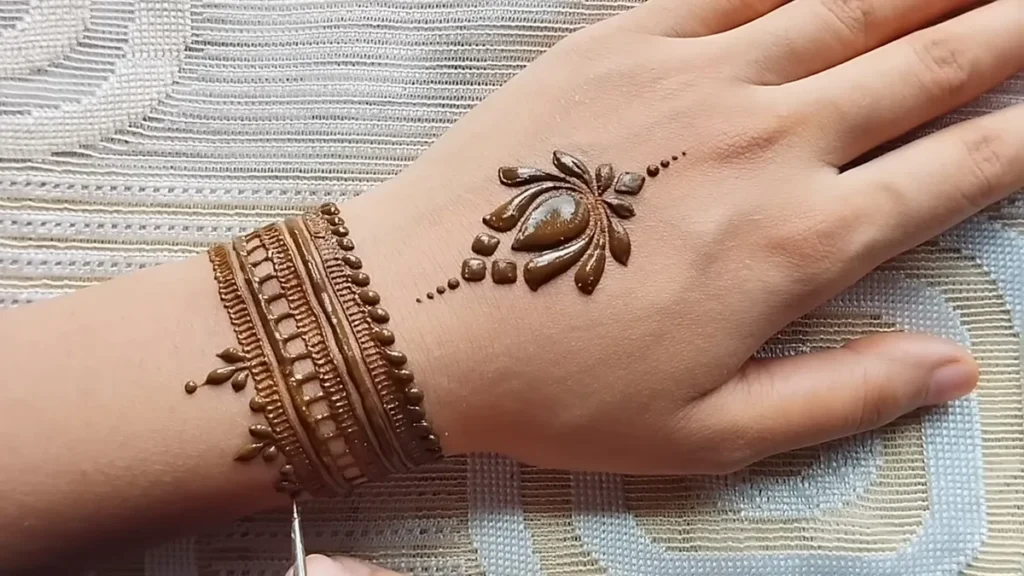
Place a five-petal outline above the wrist and finish with two leaves. Leave the fingers bare or add one narrow band.
2 Fine floral wrist vine

Let a slender stem curve around the visible wrist with small leaves and one flower. Do not turn it into a solid bracelet unless that is the look you want.
3 Single finger botanical trail

Use a stem with alternating leaves along one finger. Keep the rest of the hand open so the narrow trail remains distinct.
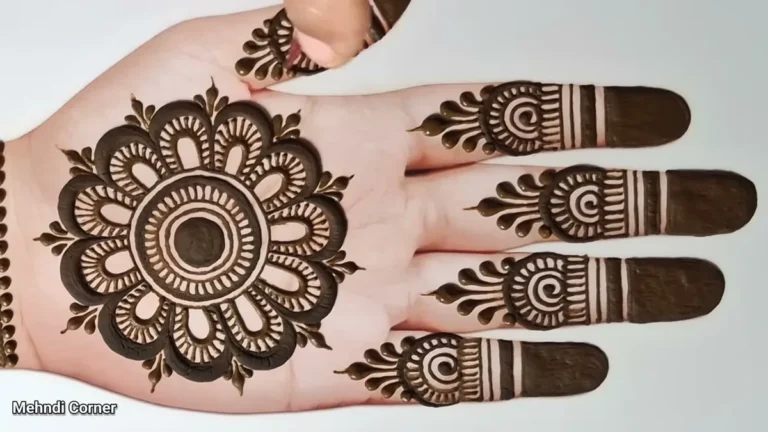
4 Small palm mandala

Build a compact circle with one petal layer. Leave clear space around it rather than extending filler toward every finger.
5 Bow and dotted tail

Draw a small bow near the wrist and taper the tails into a few dots. Use a real applied reference to judge how fine the lines can be.
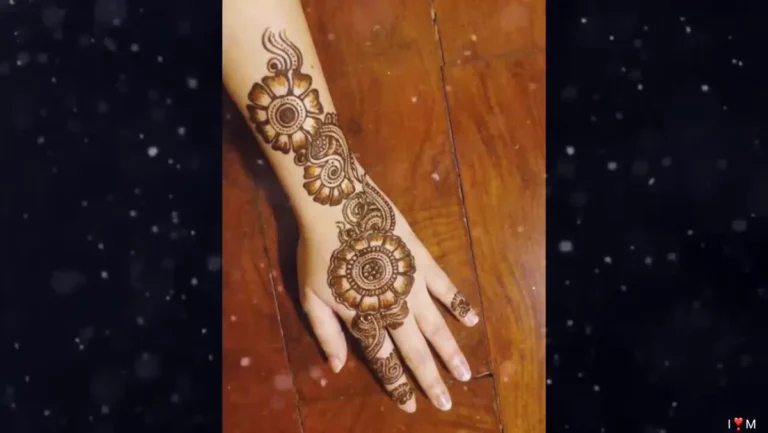
6 Crescent of small flowers

Arrange a few differently sized flowers in a gentle curve along one side of the hand. Keep a gap between the blooms.
7 Minimal ring bands

Use paired narrow lines and a tiny central dot or petal on selected fingers. Coordinate with actual rings to avoid placing both details in the same space.
8 Open paisley accent
Draw one small paisley with a leaf inside it. Keep the surrounding skin bare. A visible outline matters more than dense internal texture.
9 Side hand scallops

Follow the outer hand with a short scalloped line and small leaves. Check the relaxed hand so the edge looks smooth in a natural pose.
10 Half flower at the wrist

Use a semicircular bloom emerging from a simple wrist border. This gives the pattern a clear starting point without a long trail.
11 Dotted jewellery connection
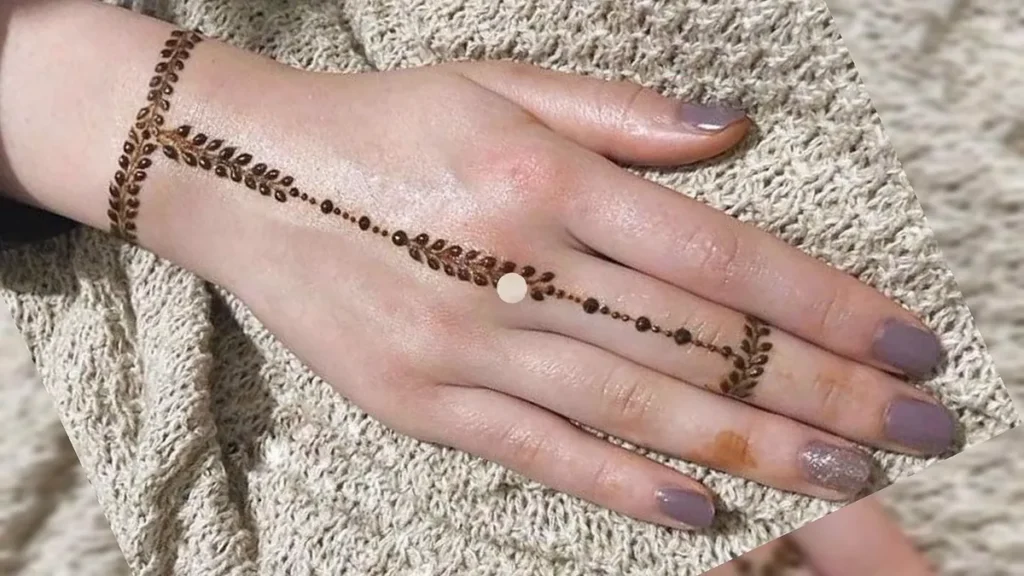
Connect a tiny central ornament to one finger band. Keep the chain short and spaced so it reads as a connection rather than scattered dots.
12 Paired small motifs

Repeat the same small flower on both hands at a similar height. Keep the layouts coordinated, even if the minor leaves differ.
A small design plan for a beginner
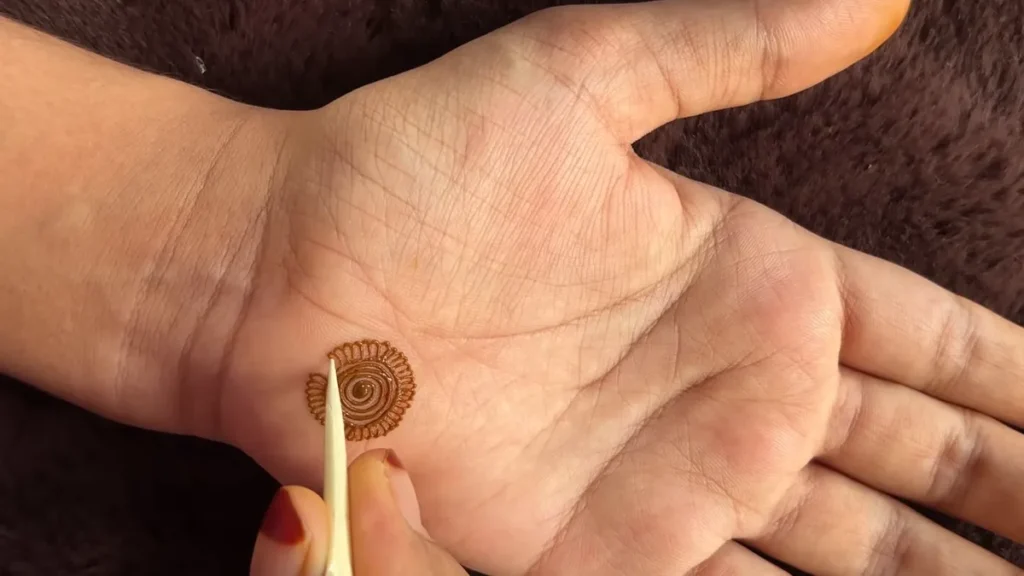
Choose a five-petal flower, one curved stem and three leaves. Practise those three elements separately. On the hand, draw the flower first, check its position, then add the stem and leaves. Stop before adding a second centerpiece.
If the first attempt looks sparse, take a photograph before filling it. A close-up view can make a balanced minimal design seem emptier than it looks when you see the whole hand.
What makes a minimal design look messy
Inconsistent spacing often matters more than the number of motifs. A few dots placed irregularly can look accidental; a short row that gradually tapers looks intentional. Likewise, leaf shapes that change size without a pattern can distract from a clean stem.
Test line thickness on a practice surface. Very fine lines may be difficult with a cone that produces a thicker flow. Adapt the design to the tool rather than forcing tiny details.
Match the design to outfits and everyday plans
For a detailed sleeve or heavy bangles, use a simpler wrist area. For a plain outfit, a compact cuff can carry more texture. If you need to use your hands soon after the appointment, discuss coverage and care with the artist instead of assuming minimal coverage dries instantly.
In India and Pakistan, occasions and regional preferences vary widely. Use familiar terms such as mehndi, mehendi or henna naturally when searching for references, but do not treat one style as the required look for a whole country or community.
Take better reference photographs
Use soft light, a plain background and a relaxed hand position. Photograph the whole hand as well as a close detail. Show the developed stain separately from fresh paste, and avoid editing the color to exaggerate darkness.
Aesthetic does not mean lighter skin, longer fingers or flawless skin. The useful reference is the actual pattern and its placement.
Product and skin considerations
Use a labelled product intended for the application and follow its instructions. Avoid black henna and harsh darkening tricks. Do not apply to irritated or broken skin. If burning, itching or a rash occurs, stop and get medical advice.
Save the design that fits your preferred placement, then use our simple beginner guide for the drawing sequence or our lotus guide for more floral options.
Frequently asked questions
What is aesthetic mehndi
It is a style description rather than a fixed traditional category. Here it means a coherent design with deliberate spacing, suitable scale and a limited set of shapes.
Can aesthetic mehndi be traditional
Yes. A small mandala, paisley or lotus can have a restrained aesthetic without abandoning traditional motifs.
Which placement suits a tiny design
The wrist, side of the hand or one finger can suit a small motif. Match the detail to the available space and your jewellery.
Are very fine lines always better
No. Lines need to suit the cone and the size of the design. A clean medium line can look more polished than uneven ultra-fine work.
Can I use an AI image as my artist reference
You can label it as a concept, but a real applied design is more useful for judging feasible lines, placement and stain. Do not present an AI concept as an artist’s completed work.



One Comment