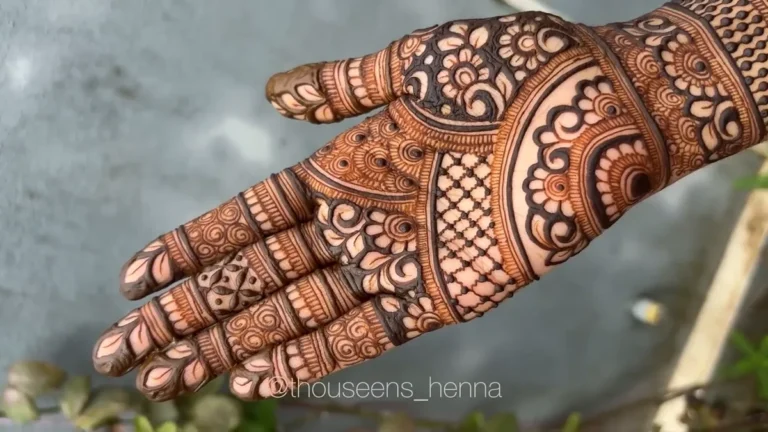
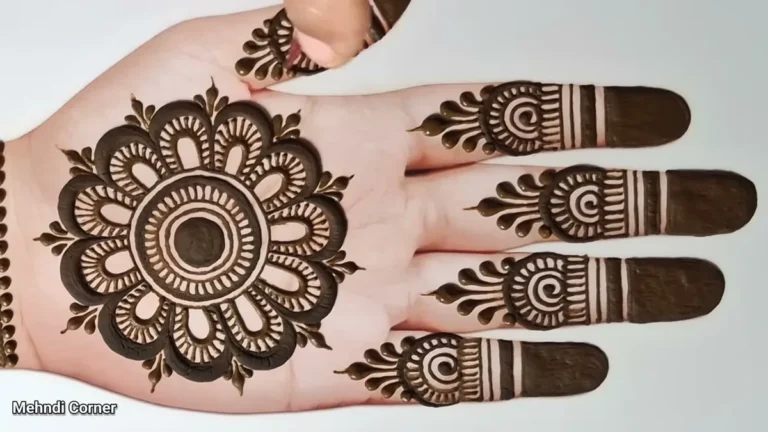
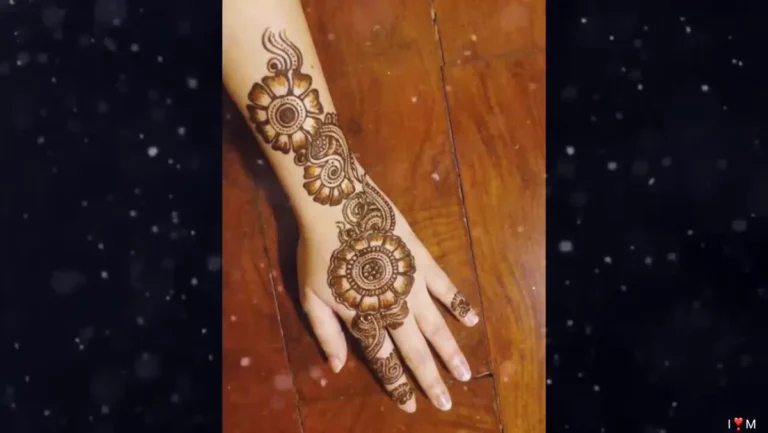
Lotus Mehndi Design: Simple, Bridal & Back-Hand Ideas
A lotus mehndi design uses an upright central petal, paired side petals and a wider lower layer to form the flower’s recognizable outline. You can keep that shape small and open or use it as the center of a bridal composition with borders, leaves and finger work.
Choose the placement first. A palm lotus can stand alone; a back-hand lotus often benefits from a stem or jewellery-style connection. A small wrist lotus needs fewer internal lines than a full-hand centerpiece.

Choose your lotus mehndi design
- First attempt: a five-petal outline with a short stem.
- Minimal look: one open lotus and a few dots.
- Festival design: a lotus with a curved leaf trail and a light wrist border.
- Bridal design: a larger layered bloom, planned finger sections and a coordinated cuff.
- Back-hand focus: a central lotus linked toward one finger.
These are layout choices, not rules about who may wear a lotus. If you want religious or cultural symbolism included, discuss the specific meaning and placement with your artist rather than assuming one meaning applies to everyone.
Twelve lotus mehndi ideas by placement
1 Small central palm lotus

Use a clear five-petal shape and leave a circle of open skin around it. Add small fingertip accents only if you want a more complete hand composition.
2 Lotus inside a palm mandala

Frame the bloom with one or two circular borders. Keep the flower large enough to remain identifiable inside the frame.
3 Diagonal lotus trail
Place a large bloom near the wrist and a smaller bud toward a finger. Join them with a curved stem and a few leaves.
4 Back hand finger chain lotus
Connect a centered flower to a single finger band using dots. For more placement examples, use our dedicated lotus back-hand guide.
5 Wrist bracelet lotus
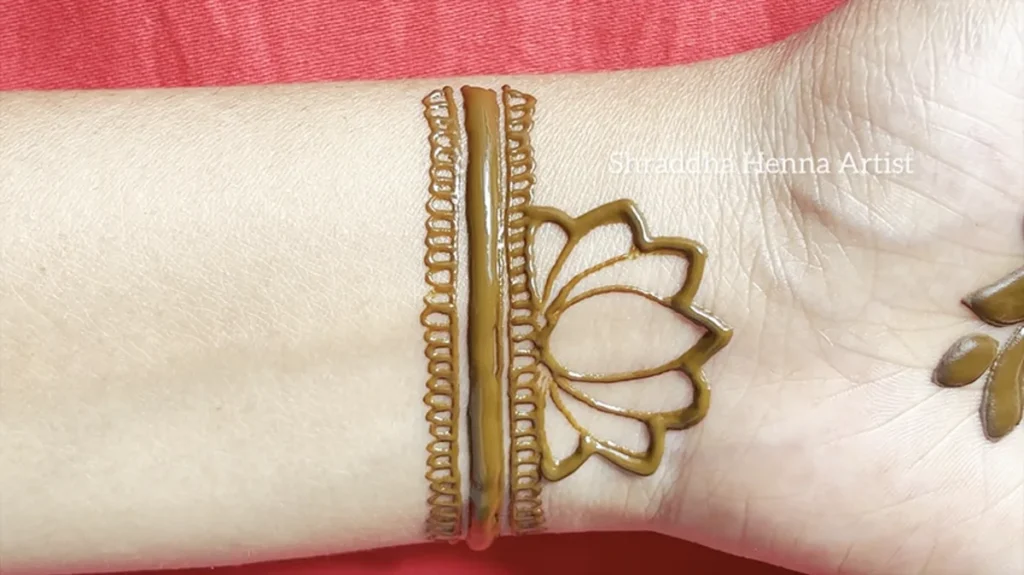
Put a small lotus above a narrow cuff. Check the sleeve and bangles first so the flower does not disappear underneath them.
6 Open petal lotus

Leave the interiors of the petals bare and decorate around the flower instead. The petal shape should stay visible when viewed at arm’s length.
7 Lotus with paisley
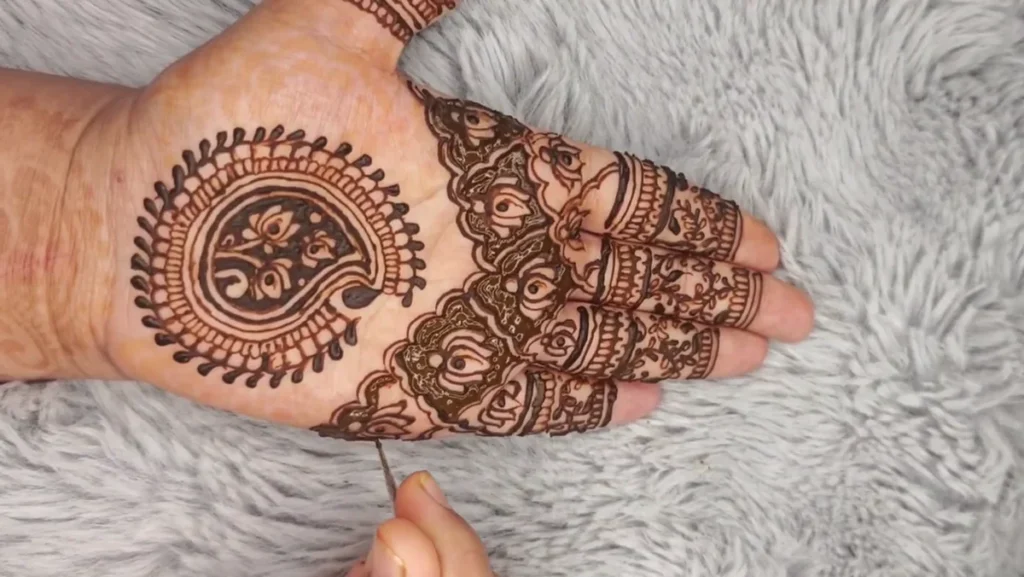
Curve a paisley beside the flower and let a shared border connect them. Make one motif clearly larger to avoid competing centers.
8 Lotus with an architectural arch

Frame a flower beneath an arch with a scalloped border. This works as a more formal palm centerpiece without requiring a fully filled hand.
9 Bridal layered lotus
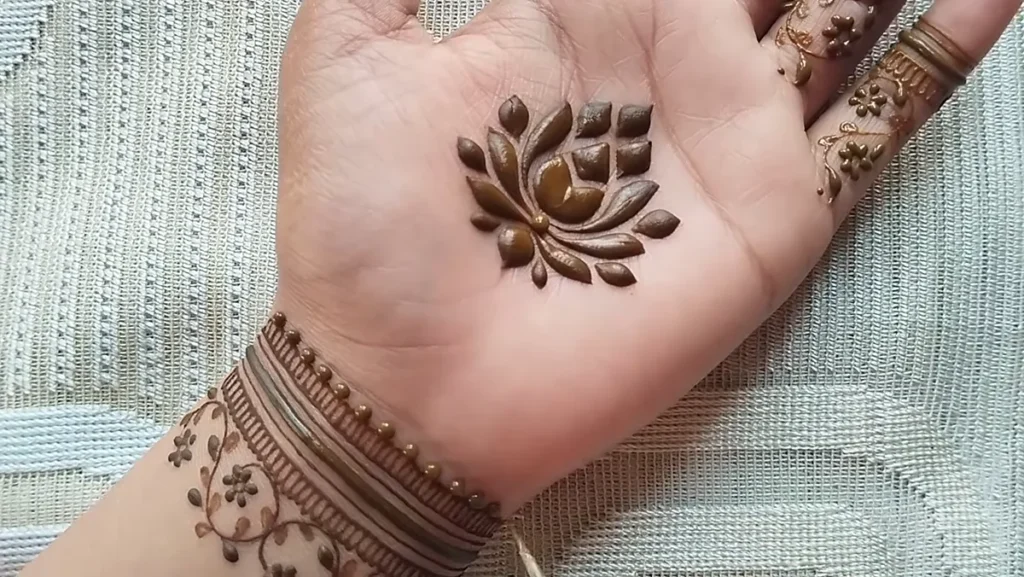
Use a larger flower with two readable petal layers. Build finger panels and a cuff around it, leaving separation between the sections.
10 Lotus buds on fingers
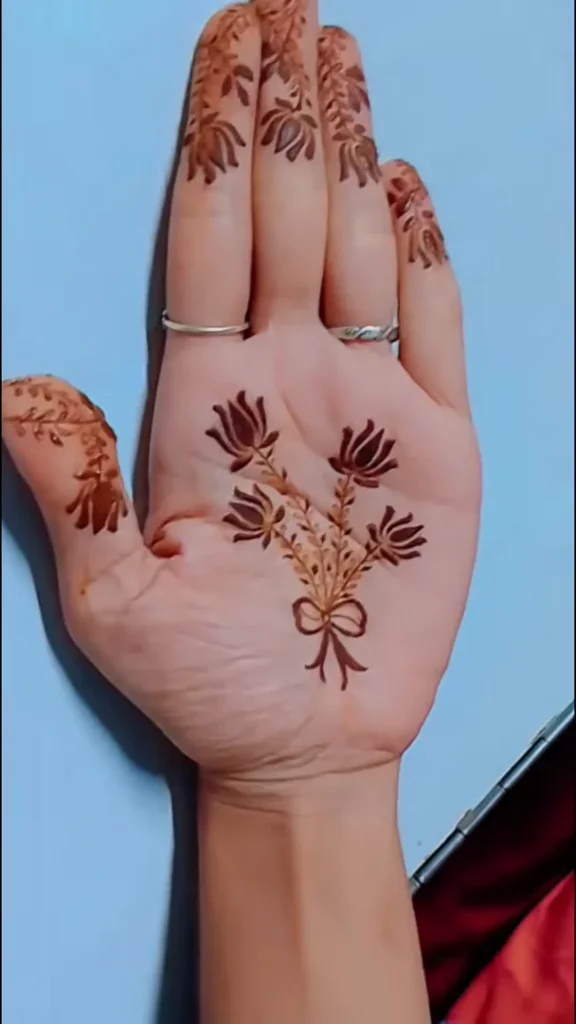
Use small buds rather than fully opened flowers on narrow fingers. Keep fine internal shading to a minimum at this scale.
11 Lotus on the foot

Place a bloom on the top of the foot and connect it toward the ankle. Plan the shape around shoe straps and the visible hemline.
12 Paired lotus hands
Match the size and height of the main flower on both hands. The filler details can vary while the overall composition remains coordinated.
How to draw a lotus step by step
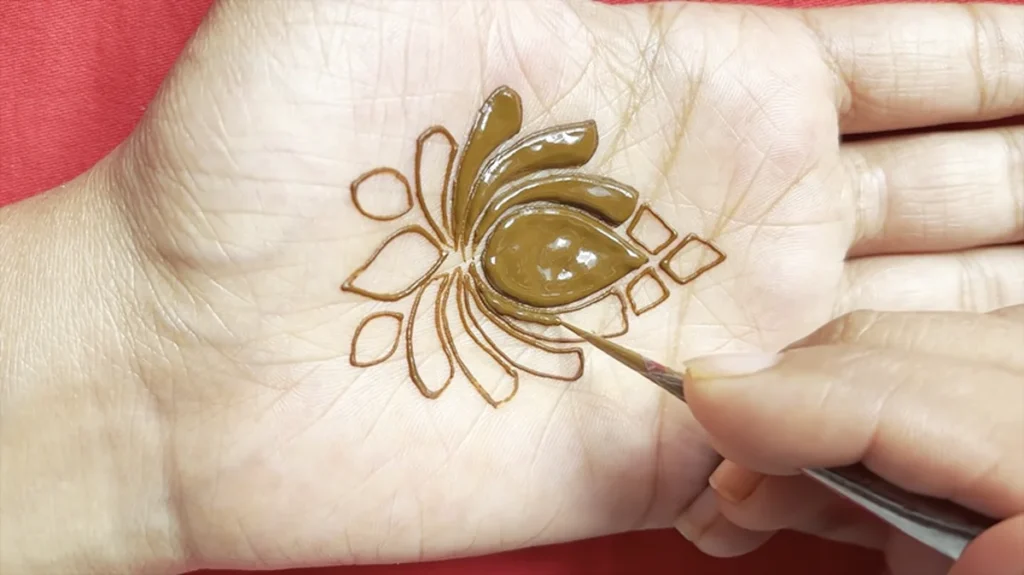
- Draw an upright teardrop-shaped petal as the center.
- Add a curved petal on each side, with their upper tips pointing outward.
- Add a lower petal on each side to widen the base.
- Close the lower edge with a shallow curve.
- Add a short stem or two leaves if the design needs a direction.
- Check the silhouette. Add thin internal lines only after the outline reads clearly as a lotus.
Practise several flowers at the size you intend to use. A detailed lotus copied at half size may lose the gaps that made the reference attractive.
Why does my lotus look like a generic flower
Look at the silhouette. A lotus usually needs a strong upright center, layered side petals and a broad lower edge. If every petal radiates equally around a circle, the result may read more like a rosette. That is not a failed flower, but it is a different shape.
Use a clear reference and draw the outline before the shading. Adding a stem or extra dots will not correct a silhouette that is hard to recognize.
Make a bridal version without losing the flower
Increase the scale of the bloom before adding more petal layers. Place the cuff, finger panels and side fillers around it on a paper plan. Use one repeating detail, such as a scalloped edge, to connect the sections.
For a fuller look, alternate dense panels with open borders. If every petal, leaf and background area has the same line density, the flower can disappear into its surroundings.
Choose references and products carefully
Use real artist photographs for finished designs and ask permission before republishing them. A flat drawing can explain a petal sequence, but it cannot demonstrate the stain result on skin. Do not use an AI image as evidence that a real application produced a particular color or level of detail.
Choose a labelled body-art product and follow its instructions. Avoid black henna, hair-dye additions and improvised heating methods. Stop if the product causes burning or irritation. For existing skin conditions, ask a qualified clinician rather than following forum remedies.
Save one reference for the flower and one for the amount of coverage. That gives your artist a clearer brief than a collection of unrelated screenshots.
Frequently asked questions
Is lotus mehndi suitable for beginners
Yes. Start with a small five-petal outline. Dense bridal flowers with fine shading are a later step.
Where does a lotus mehndi design look best
The palm and back hand give the flower room. Wrist, finger and foot versions work when the detail is adjusted to the available space.
Can a lotus be used in Arabic style mehndi
Yes. Place it along a flowing diagonal trail with leaves and open space rather than treating the flower as a centered mandala.
What is the difference between lotus and mandala mehndi
A lotus is a flower motif. A mandala is a circular composition; a lotus can sit inside one, but the two are not interchangeable.
Does a lotus have one fixed cultural meaning
No. Meanings depend on the tradition and the wearer. Do not assign a universal religious meaning to a design chosen for its appearance.