Single Leg RDL Form Progressions and Common Fixes
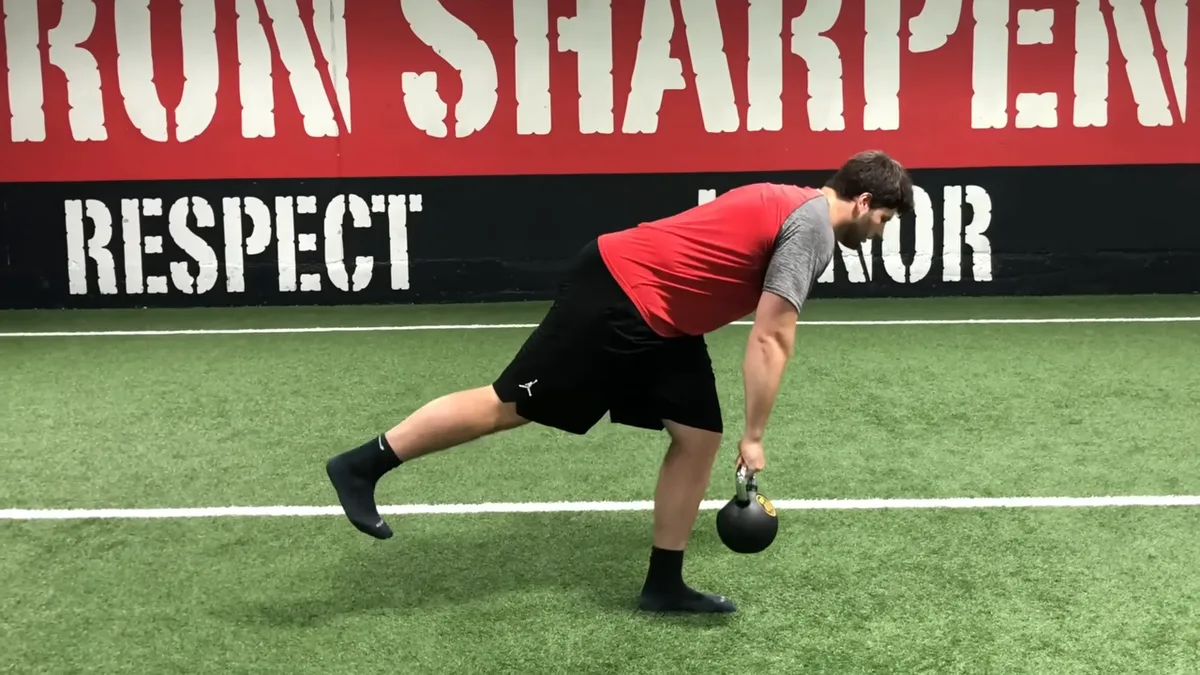
A single leg RDL, or single-leg Romanian deadlift, is a hip-hinge exercise performed mainly on one supporting leg. You move your hips backward as your torso tips forward, then return to standing. The exercise challenges the hips and hamstrings while requiring balance and trunk control.
Start with support and no added weight if balancing distracts you from the hinge. Touching a wall is a useful way to learn the movement.
Learn the movement in a stable position
Stand beside a wall or sturdy support. Keep the supporting knee softly bent, with your foot comfortably planted. Move slowly enough that you can stop anywhere in the repetition.
- Shift your weight onto the working leg and lightly lift the other foot.
- Push your hips backward as the free leg moves behind you.
- Let your torso lean forward with the movement, keeping your back comfortably long.
- Stop at a range you can control without twisting or rounding to reach farther.
- Press through the supporting foot and bring your hips forward to stand.
- Reset your balance before beginning the next repetition.
ACE’s exercise library describes the single-leg RDL as a controlled hip hinge with a slightly bent supporting knee. Your free leg does not need to reach a particular height, and your torso does not have to become parallel to the floor.
Know what you should be controlling
Keep the pelvis from opening sideways as the free leg rises. Imagine the front of your hips continuing to face the floor rather than turning toward the wall beside you. Let the knee remain soft instead of locking it rigidly.
The movement should come mainly from the hip. If you keep bending the knee deeper, you may be turning it into more of a single-leg squat. If you reach down with your shoulders while your hips stay still, reduce the range and practice the hinge again.
You may feel effort through the hip and back of the thigh. Sharp pain, radiating symptoms, or a painful back sensation is a reason to stop and seek individual advice rather than forcing the movement.
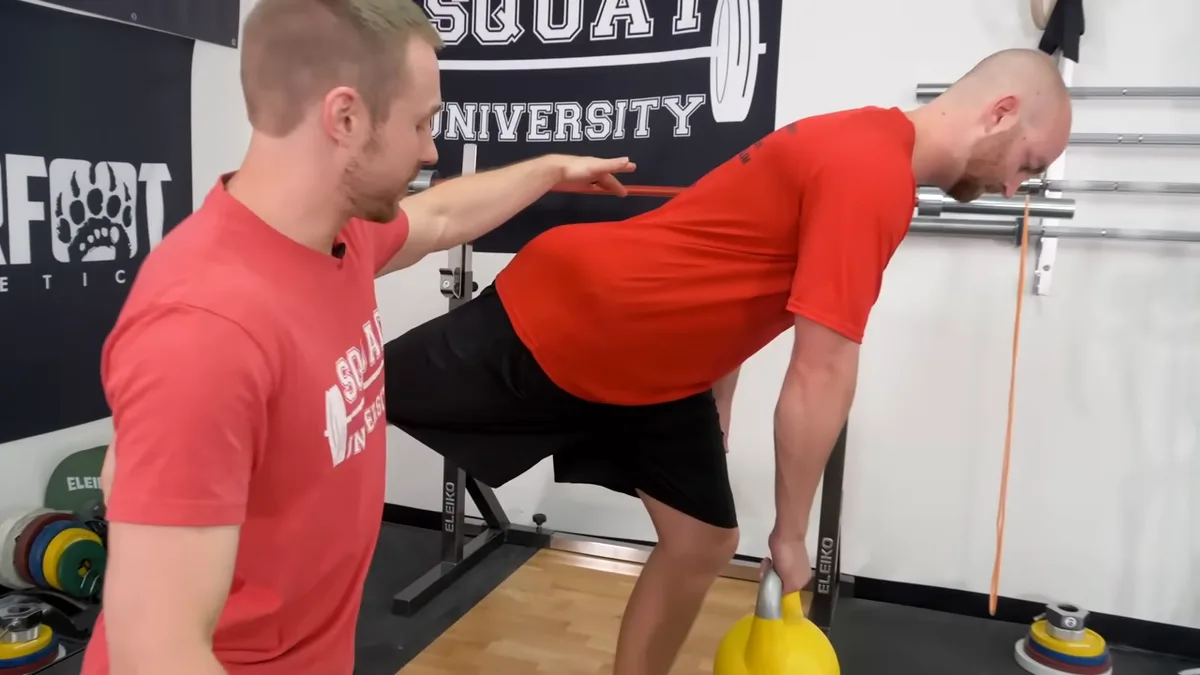
Fix common problems
| Problem | First adjustment |
|---|---|
| Losing balance | Keep fingertips on a stable support |
| Hips rotating open | Lower the free leg and reduce the range |
| Back rounding to reach the floor | Stop higher and keep the load closer |
| Knee bending into a squat | Practice pushing hips backward |
| Rushing between repetitions | Reset in standing after each one |
| Grip limiting the set | Use a lighter load or a supported variation |
The floor is not a required target. Reaching it by changing your position does not make the repetition better.
Progress from support to load
A kickstand RDL leaves the toes of the nonworking leg lightly on the floor. That can reduce the balance challenge while you learn to load the working hip. A supported single-leg version is another option.
When the movement is controlled, you can add a light dumbbell or kettlebell. One common variation holds the weight in the opposite hand from the supporting leg; ACE describes a contralateral dumbbell version in its library. Other loading options exist, so choose the variation that fits your goal and technique.
Do not increase weight and range at the same time simply to make the exercise harder. First maintain a repeatable position, then adjust one variable.
Add it to a session
As an introductory practice example, try one or two small sets of five controlled repetitions per side with support. Rest as needed. These numbers are an editorial starting example, not an individualized prescription.
Use a load and repetition count that let you finish with good control. You do not need to train the exercise to exhaustion, especially while learning balance. If the goal is heavier hip strength work and balance repeatedly limits you, a bilateral or kickstand hinge may be more practical.
Place the movement where you can give it attention. Fatigue from a hard circuit can make learning a new balance task unnecessarily difficult.
When to seek coaching
If you cannot tell whether your back or hips are moving, ask a qualified coach to watch. A side view and front view can reveal different issues, but a video does not replace an assessment when you have pain.
People recovering from injury or working with balance limitations may need a different exercise. Use the variation that allows useful training without forcing a shape your body cannot currently control.
Frequently asked questions
Does the weight have to touch the floor
No. Stop where you can maintain the intended hinge and control.
Which hand holds the dumbbell
The opposite hand is one common option. Loading choices vary; begin with the version you can control and understand.
Is using support cheating
No. Support can let you focus on the hip movement and may remain useful for loaded training.
Is the single leg RDL better than a regular RDL
It serves a different balance and unilateral-control demand. The better choice depends on your goal and ability.
Should my supporting knee be straight
Keep a small, comfortable bend rather than locking it. Avoid turning the movement into a deep squat.