Best Group Exercises at Home With a Shared Beginner Routine
The best group exercises at home are movements everyone can adjust independently: marching, chair squats, wall push-ups, and simple balance work. A shared timer lets people exercise together without requiring the same speed, depth, or number of repetitions.
This sample session is for generally healthy adults who want an accessible starting routine. Adapt it to your space and ability; it is not a rehabilitation plan or a competition.
Set up the room before you start
Clear obstacles, move fragile objects, and keep pets and children away from moving feet and equipment. Everyone should be able to reach out and step sideways without touching another person. Use a non-slip surface and sturdy chairs that will not roll.
Agree that anyone can pause. One person can manage the timer, but nobody should pressure a partner to finish a painful repetition. In an online session, position the screen where you can see it without repeatedly twisting your neck.
The American Heart Association offers short home circuits with movements performed at each person’s pace. That approach is useful for mixed-ability groups.

Choose movements with an easier option
| Movement | How to begin | Easier option |
|---|---|---|
| March in place | Lift alternate feet at a comfortable pace | Seated marching |
| Chair squat | Sit back toward a stable chair and stand | Use a higher seat and hands as needed |
| Wall push-up | Bend elbows toward a wall and press away | Stand closer to the wall |
| Side step | Step sideways and bring feet together | Smaller steps or seated side taps |
| Standing calf raise | Lift heels while holding a stable support | Seated heel raise |
| Hip hinge | Push hips back with a soft knee bend | Smaller range with hands on hips |
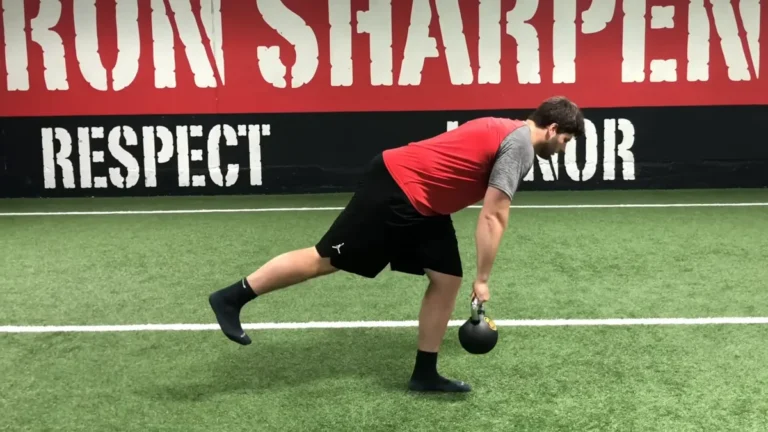
For the hip hinge, think about moving your hips toward the wall behind you while keeping your back comfortably long. It should feel different from dropping straight down into a squat. Leave loaded hinges for a session where someone can check your technique.

Follow this twenty minute group workout
The timings below are an editorial sample, not a prescribed dose for every participant. Start with fewer rounds if needed.
- Warm up for four minutes with easy marching, side steps, shoulder movements, and gentle practice squats.
- Use the six movements in the table as stations. Spend 30 seconds moving and 30 seconds resting or changing position at each station.
- Repeat the six-minute circuit once, making twelve minutes of circuit time.
- Finish with four minutes of slower walking, relaxed breathing, and comfortable movement.
Four minutes plus twelve minutes plus four minutes equals twenty minutes. Someone who needs a shorter session can do one circuit and finish early. Keep water nearby and take additional breaks when needed.
Make it work for different fitness levels
Change one thing at a time: range of motion, pace, support, or exercise difficulty. Someone doing wall push-ups can train beside a person doing a more demanding variation. They do not need to perform equal repetitions for the session to count.
Use a conversational effort for an introductory session. If you cannot speak comfortably, slow down or rest. Do not hold your breath while trying to match another person.
For a seated participant, choose a stable chair and movements they can perform comfortably. A disability or health condition may require individual adaptations beyond simply sitting down; ask a qualified professional when you need them. NCHPAD provides accessible home-activity ideas.
Keep the group involved without unsafe challenges
Let each person pick the music or lead the warm-up on different days. Track attendance or completed sessions rather than who burns the most calories. Avoid partner lifts, blindfolded drills, furniture jumps, and speed competitions in a cramped room.
If an exercise hurts, stop that movement. Chest pain, faintness, or unusual breathlessness calls for prompt assessment rather than encouragement to push through. People with symptoms, a recent operation, or an individual exercise restriction should follow their care plan.
Build a routine you can repeat
Choose a realistic next session before everyone leaves. Repeat the same basic circuit long enough to learn it, then adjust one station when the group is comfortable. A consistent short session is easier to maintain than a complicated routine that needs new equipment each time.
This workout can contribute to your activity week, but one twenty-minute session does not cover every fitness need. Adults are generally advised to combine aerobic activity with muscle-strengthening work over the week.
Frequently asked questions
How many people do we need
Two people are enough. Larger groups work if everyone has clear floor space and can follow the timer safely.
Do we need equipment
A clear area, a wall, and stable chairs are sufficient for this sample. You can add equipment later if it serves a specific goal.
Can beginners and experienced people train together
Yes. Use the same work periods with individually chosen exercise variations and effort.
Is this suitable for children or older adults
It was written for adults generally. Children, frail older adults, and people with medical restrictions may need a different session and supervision.
Should everyone do the same number of repetitions
No. Keep technique comfortable and controlled. A shared timer coordinates the group without imposing the same workload.