Cat Cow Stretch Steps Modifications and Common Mistakes
The cat cow stretch is a gentle movement between rounding and extending the spine, usually performed on hands and knees. It is often used as mobility practice or part of a warm-up. It should stay within a comfortable range rather than forcing the back into its largest possible arch.
If you are using it because of pain, remember that one exercise cannot identify or treat every cause of back symptoms.
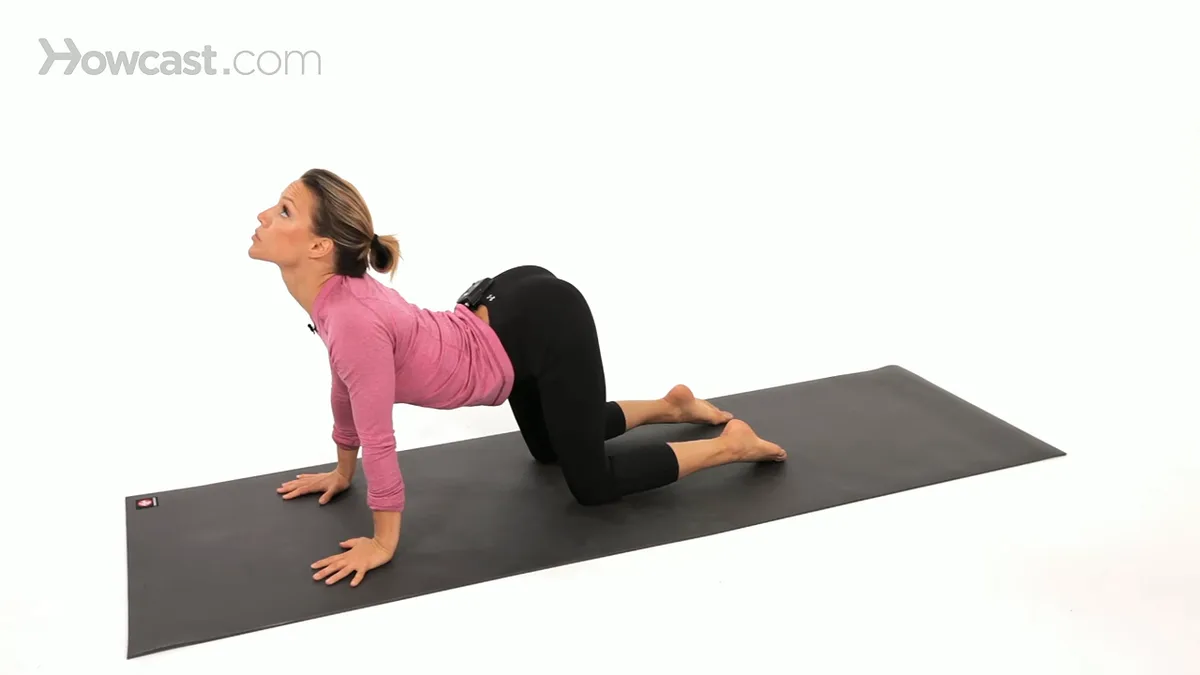
Set up on hands and knees
Use a comfortable surface. Place your hands around shoulder-width apart and knees around hip-width apart, with hands beneath shoulders and knees beneath hips. Begin with your back in a relaxed middle position.
Spread pressure through the hands rather than pushing all your weight into the wrists. Let the neck follow the spine instead of lifting the chin as high as possible.
Move between cat and cow
- Exhale gently as you round your back upward into cat.
- Allow your head to follow the movement without pulling your chin hard into your chest.
- Reverse slowly, moving toward a comfortable arch for cow.
- Inhale naturally as the front of your body opens.
- Return through the middle and repeat without rushing.
ACE describes cat cow as spinal flexion and extension coordinated with breathing. Breathing should help the rhythm, not become another reason to strain. If you lose the pattern, breathe normally and reduce the movement.
Start with a small amount
As an introductory example, try five slow cycles, pause, and notice how you feel. You can do less or stop earlier. This is an editorial practice suggestion, not a treatment prescription.
There is no need to chase a deep stretch or hold your breath. A small, comfortable movement may be more useful than a dramatic shape you can only reach by collapsing into the low back.
Fix the common mistakes
| What happens | What to try |
|---|---|
| Wrists feel overloaded | Reduce weight through hands or use a seated version |
| Only the neck moves | Keep the head quiet and think about moving the back |
| Cow feels pinchy | Make the arch smaller and avoid dropping suddenly |
| You rush through the middle | Pause briefly in a comfortable neutral position |
| Knees are uncomfortable | Add suitable padding or change position |
| You hold your breath | Use smaller movements and breathe normally |
Pain is not evidence that you found the right spot. Stop a painful version and ask for guidance if you are unsure how to adapt it.

Seated and standing alternatives
For a seated variation, sit on a stable chair with your feet supported. Rest your hands on your thighs. Gently round your upper back, return through the middle, and then open your chest within a comfortable range. Avoid leaning so far that balance becomes the main task.
A standing version can use hands supported on a sturdy surface. Make sure the support cannot slide. These alternatives change the loading and may feel different; they are not identical substitutes for every purpose.
If you have a recent injury, operation, diagnosed spinal condition, or movement restrictions, ask your clinician or physical therapist which version is suitable. Pregnancy also calls for individual adaptations rather than a universal instruction to increase the arch.
Where it fits in a routine
Cat cow can be a short movement break after sitting or part of an easy warm-up before other exercise. It does not replace strength work, walking, or an individualized rehabilitation plan.
If you are warming up for a specific activity, follow it with movements that prepare you for that activity. A few spinal movements do not automatically prepare the wrists, shoulders, and legs for every workout.
When to seek help for symptoms
Stop if the movement produces sharp pain, radiating symptoms, dizziness, or worsening discomfort. New weakness or numbness, loss of bladder or bowel control, or significant symptoms after injury need prompt clinical attention rather than another stretch attempt.
If ordinary stiffness repeatedly returns or limits your day, discuss the pattern with a professional. Tell them what triggers it, how long it lasts, and which movements change it.
Try a comfortable version, note the response, and avoid increasing the range just to match someone in a video.
Frequently asked questions
Is cat cow the same as cat camel
The names are often used for a similar rounding-and-arching movement. Follow the instructions and range given for the specific variation.
Should I feel it in my low back
You may notice movement there, but pain or pinching is a reason to reduce the range or stop.
Can I do it every day
Some people use gentle mobility daily. Suitability depends on your symptoms and circumstances; it should remain comfortable.
Is there a wrist-free option
A seated version avoids supporting your body through the hands. Choose the variation that suits your needs.
Will it cure back pain
No exercise can promise that for every cause. Persistent or concerning symptoms need individual assessment.