Small Tattoo Ideas That Leave Room for Clear Detail
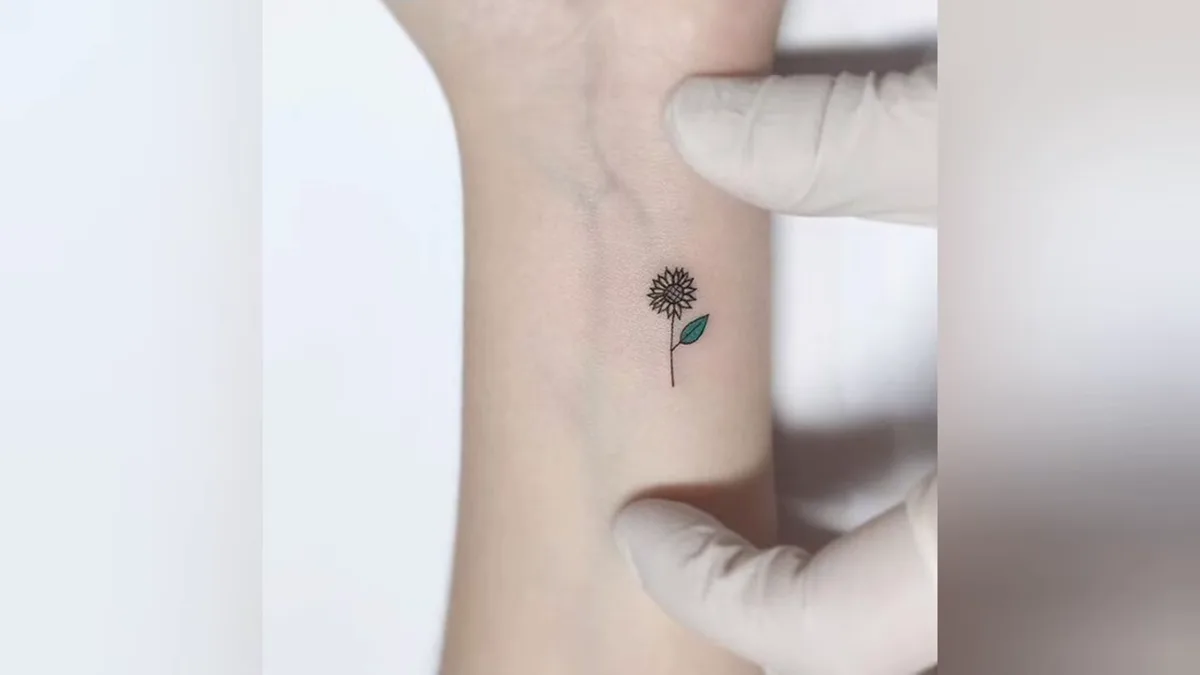
Good small tattoo ideas begin with a simple shape and enough space for it to remain readable. A tiny moon, a botanical sprig, or a short initial can work well as a concept, but the right final size depends on the artist’s technique, placement, and the detail you want to keep.
Start with the image you care about, then let the artist advise how small it can reasonably be. Small should describe your preference, not force an intricate drawing into an unsuitable space.
 >
Twelve ideas to discuss with an artist
| Idea | How to keep it simple |
|---|---|
| Crescent moon | Use a clear silhouette |
| Single leaf | Limit tiny veins |
| Botanical sprig | Leave space between leaves |
| Mountain outline | Choose one recognizable ridge |
| Wave | Keep the curve distinct |
| Pet silhouette | Use a recognizable profile |
| Initial | Pick lettering that reads at scale |
| Small star | Keep points separated |
| Paper airplane | Simplify the folded lines |
| Personal object | Retain its identifying features |
| Abstract shape | Decide which edges matter most |
| Small flower | Avoid crowding many petals together |
These are design prompts rather than ready-made stencils. A personal reference can make a familiar motif feel specific without adding more detail.
Choose meaning without forcing a story
A tattoo can mark a memory, honor someone, or simply be an image you enjoy. You do not need to invent a major life event to justify a small design.
If a symbol comes from a religious or cultural tradition, learn what it means and whether there are specific expectations around its use. For text in a language you do not read, ask a fluent speaker to verify the spelling and meaning before the appointment. A translation tool alone is not enough for permanent lettering.
Let placement influence the drawing
The inner forearm offers a different canvas from a finger, ankle, or area behind the ear. Consider how often the site is visible, what rubs against it, and whether you can follow the studio’s aftercare guidance in your usual routine.
Do not assume a small tattoo is automatically easy to hide or painless. Placement, sensitivity, clothing, and the design itself matter. Ask the artist about the location you are actually considering.
Try a paper mockup at actual size. Look from normal viewing distance, move the body part, and check the outline in a mirror. A highly magnified phone photo can make tiny detail appear more readable than it is in daily life.

Fine lines and aging need a realistic discussion
Ask to see healed work in the style and size you want. Fresh examples do not show the whole story. No artist should have to promise that every tiny detail will remain unchanged forever.
Closely spaced marks may be harder to distinguish over time. Your artist may recommend enlarging the design or simplifying it. Listen to the reason rather than treating the smallest possible size as the only acceptable result.
If you are planning several pieces, leave intentional space between them. A collection can look coherent without every tattoo being identical in size or theme.
Choose a studio and understand the quote
Ask what the price includes, whether the studio has a minimum charge, and how changes or touch-ups are handled. A small image can still require consultation, preparation, and careful placement, so size alone does not determine price.
Check hygiene practices and local requirements. Tattooing carries risks such as infection and reactions to ink. A low price or a polished social-media page does not answer those questions.
Do not attempt a home tattoo because the design looks simple. A clean-looking line on a screen says nothing about sterile equipment or safe practice.
Make the final stencil check count
Confirm spelling, orientation, size, and position before tattooing begins. If you feel uncertain, ask for a pause or adjustment. It is easier to move a stencil than to change a permanent piece.
Bring one reference for the motif and another showing the style you like. Explain which features matter so the artist can create an original design rather than combine several unrelated images.
Frequently asked questions
What is a good first small tattoo
A simple motif you enjoy and can place comfortably is a useful starting point. Choose the artist and placement as carefully as the drawing.
How small can lettering be
There is no universal minimum that fits every script and placement. Ask the artist to show what remains readable at the proposed scale.
Do small tattoos hurt less
A smaller piece may involve less tattooing time, but pain varies by person, placement, and technique. Small does not mean painless.
Will fine lines stay exactly the same
No permanent tattoo can promise an unchanged appearance forever. Review healed examples and discuss realistic expectations.
Can I use an AI design
Use it as a labeled concept. A professional artist should check anatomy, line spacing, originality, and suitability before making a stencil.