How to Lose Face Fat and Recognize Facial Swelling
You cannot reliably choose to lose fat only from your face. When overall fat loss is appropriate, it may change facial fullness, but genetics, age, and your natural facial structure affect the result. A face that looks fuller in a photograph does not by itself mean you need to lose weight.
First consider whether you are noticing a gradual change in body composition or swelling that appeared quickly. Those situations need different responses.
Face fat and puffiness are different
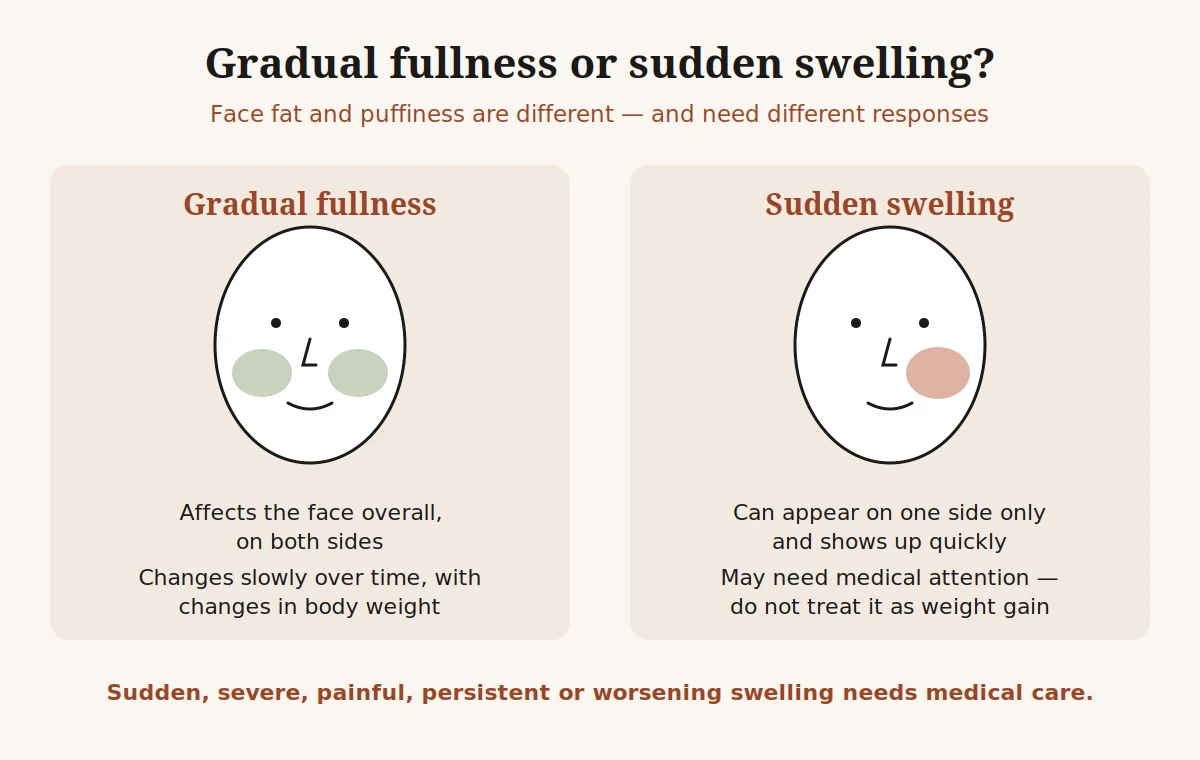
Fat distribution usually changes over time. Fluid buildup can produce facial swelling, and swelling may have causes such as allergies, infection, injury, or a reaction to medication. MedlinePlus recommends medical attention for sudden, severe, painful, persistent, or worsening swelling. Difficulty breathing needs urgent help.
If your face changes noticeably from morning to evening, that pattern does not establish a diagnosis. Note when it happens, associated symptoms, recent medicines, and whether one side is affected. Share those details with a clinician instead of assuming it is a cosmetic problem.
Choose habits that support overall health
If a clinician agrees that weight loss would benefit you, work toward changes you can maintain. Avoid a crash diet designed around a photograph or an event next weekend.
- Build regular meals around satisfying foods, including protein sources, vegetables or fruit, and fiber-rich foods you enjoy.
- Make walking or another accessible activity part of your week.
- Include strength work appropriate to your ability.
- Keep a realistic sleep routine and notice whether alcohol or other habits are disrupting it.
For most adults, CDC guidance includes at least 150 minutes of moderate activity weekly plus muscle-strengthening activity on two days. You can work toward that gradually. A short walk is a reasonable starting point when you have been inactive.
Do not deliberately dehydrate yourself to make your face appear smaller. Fluid restriction, laxatives, and excessive sweating are not a sensible route to lasting fat loss. If you have a condition that affects fluid intake, follow your clinical plan.
What facial exercises and massage can do
Moving facial muscles is different from selectively removing the fat around them. A video showing a jawline immediately after a routine does not demonstrate fat loss. Posture, expression, camera position, and lighting can all alter the comparison.
Facial massage may feel pleasant, but an immediate cosmetic change is not evidence that fat cells have disappeared. Stop if a technique hurts, irritates your skin, or worsens jaw symptoms. Avoid aggressive jaw devices or chewing routines offered with guaranteed slimming claims.
Be equally cautious with claims that a supplement, detox tea, chin strap, or single food can melt cheek fat. Ask what was actually measured, over what period, and whether the seller is using consistent photographs. Testimonials are not a substitute for a controlled comparison.
Set expectations before tracking changes
There is no dependable seven-day timetable for a slimmer face. Even people who lose the same amount of weight can see different facial changes. Overall health, energy, strength, and a sustainable routine are better measures of progress than daily close-up photographs.
If you choose to compare photos, use the same camera distance, lighting, expression, and approximate time of day. Do not use edited images as the target. A wide-angle selfie taken close to your face is especially unsuitable for judging small changes.
If you already have a weight that is appropriate for you, further weight loss may not be a useful solution. A clinician can help evaluate a new physical change without setting an unnecessary weight-loss goal.
When appearance worries need a different kind of support
Consider talking to someone you trust or a qualified professional if checking your face is taking over your day, causing you to skip meals, or keeping you away from other people. You deserve help with that distress even when nobody else can see a physical change.
Cosmetic procedures also require an individual assessment. Avoid choosing a permanent intervention from a social-media comparison. Ask a qualified clinician about limitations, risks, alternatives, and how the result may change with aging.
Keep a short note of your concern and any physical symptoms. If swelling is present, arrange medical advice; if your goal is general fitness, begin with a manageable activity rather than a face-slimming challenge.
Frequently asked questions
Does chewing gum burn face fat
There is no reliable basis for treating gum chewing as a method of selective facial fat loss. Stop if it causes jaw pain.
Can I lose face fat without losing body weight
You cannot direct natural fat loss to one chosen area. Facial appearance can also change for reasons unrelated to fat loss, including swelling or how a photo is taken.
Why is only one cheek swollen
One-sided swelling needs assessment, particularly with pain, redness, fever, or dental symptoms. Do not treat it as ordinary weight gain.
Will drinking more water slim my face
Normal hydration supports health, but drinking excessive water does not selectively remove facial fat. Follow any medical guidance about your fluid intake.
How long does it take to see a difference
There is no universal timeline. It depends on the cause of fullness and individual circumstances; a rapid change may be swelling rather than fat loss.